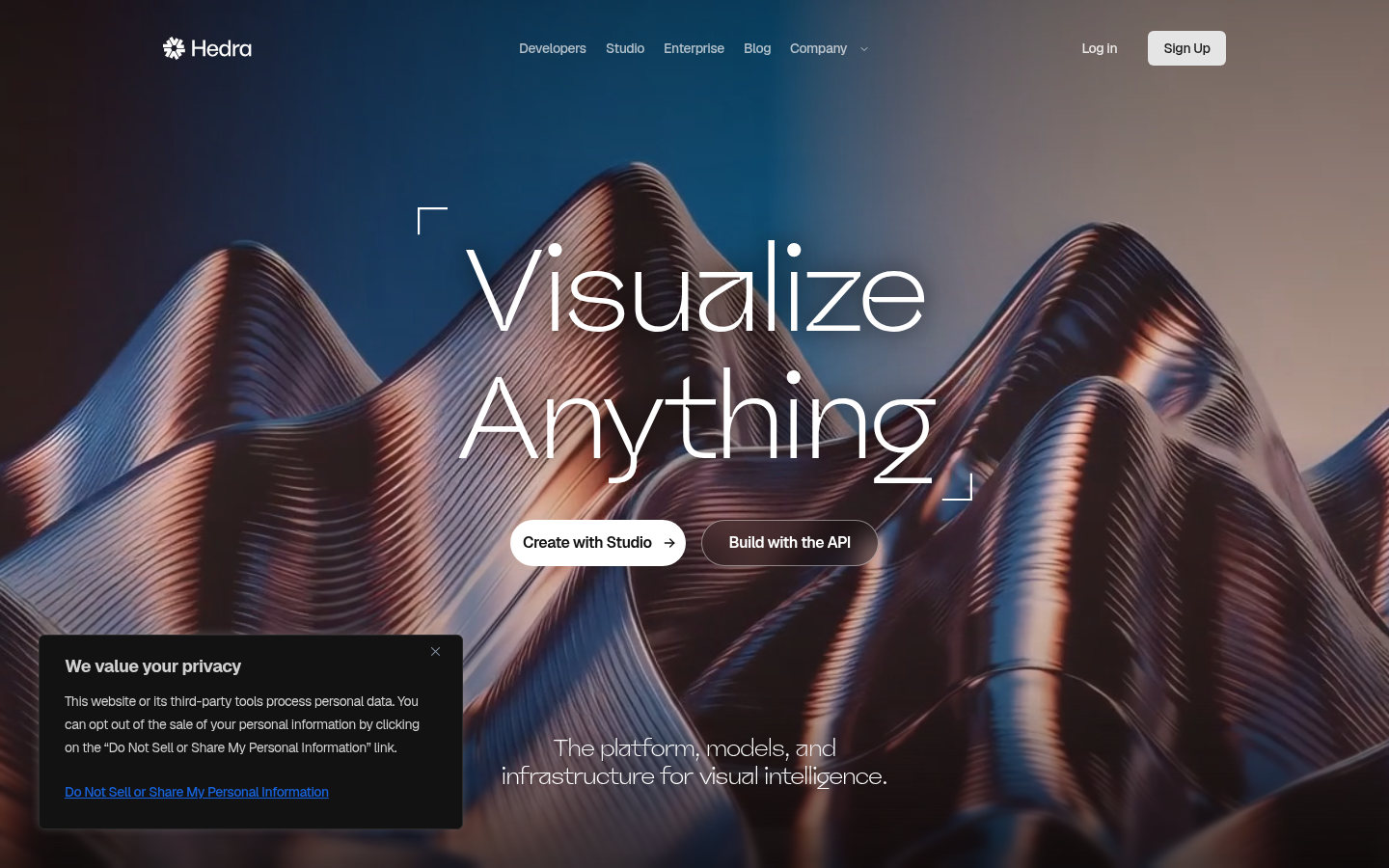
Hedra is an AI visual inference platform that builds and hosts models for generating, perceiving, and predicting visual content — including video, image, and audio — for creative professionals, marketers, and developers. It centers on a multiplayer canvas where teams assemble multi-part campaigns, backed by an AI agent that selects and operates the right underlying model for each task. Rather than shipping a single generative model, Hedra positions itself as infrastructure that runs multiple third-party and proprietary models (such as Kling and Flux) in production, alongside a developer API for programmatic access. The product targets teams that need to move from a creative brief to finished visual assets without juggling separate tools for video, image, and audio generation.
What it does
Hedra is a web-based (with desktop access noted) creative studio and inference platform built around three main components: an AI agent, a shared "infinite canvas," and access to a roster of visual and audio generation models. The agent is designed to learn a team's brand and workflow over time — it connects to existing data and tools, builds reusable "skills," and decides which underlying model (video, image, or audio) is best suited to a given generation task. The canvas is a real-time, multiplayer workspace where multiple team members can build out campaign assets, versions, and iterations together rather than working in isolated files. For developers, Hedra exposes this same model access through an API, described as part of a "sovereign diffusion stack," allowing programmatic generation to be embedded into other products or pipelines. Example outputs shown by the company include AI-generated video of glacial ice flows, neon city skylines, cracked marble busts, volcanic lava flows, and talking avatar video — spanning photorealistic environments, stylized scenes, and character/avatar animation.
Key capabilities
- Multi-model inference access: Provides access to multiple leading video, image, and audio generation models (e.g., Kling 2.6 Pro, Flux 1.1 Ultra) through a single platform rather than requiring separate subscriptions per model.
- Agent-assisted generation: An AI agent selects which model to use for a given task and how to get the most out of it, reducing the need for users to manually evaluate different generators.
- Multiplayer creative canvas: Real-time, shared workspace ("Spaces") where team members co-edit assets, track versions, and assemble multi-part campaigns together.
- Avatar and character generation: Includes capability for generating talking avatar/character video content, distinct from generic scene or environment generation.
- Developer API: Programmatic access to the same underlying visual and language models used in the consumer product, aimed at developers building custom applications.
- Credit-based usage system: Paid generation (video, image, audio) is metered via credits, with video credits deducted based on actual output duration rather than flat per-generation fees.
Pricing
Hedra offers a free plan with no credit card required, alongside paid plans starting around $20/month for individual users, plus separate tiers described for businesses and developers. Credits are the unit of consumption for paid generation features (video, image, audio) and are deducted based on factors like generated video length; monthly subscription credits reset each billing cycle and do not roll over, while separately purchased credit packs do not expire. Canceling a subscription removes access to most platform functionality apart from limited, watermarked generations. Exact plan-by-plan feature breakdowns beyond the Basic individual tier are not fully detailed in available source material. Pricing page: View pricing
Editorial review
Hedra's core differentiator is positioning itself as infrastructure and orchestration across multiple third-party generative models rather than pushing a single proprietary generator — the agent's job of picking the right model per task is a genuinely useful abstraction for teams that don't want to manually track which video or image model performs best for a given style. The multiplayer canvas is a sensible response to the common pain point of generative AI outputs living in scattered, single-user sessions rather than a shared campaign workspace. The credit-based pricing model, with duration-based deduction for video, is more transparent than flat per-generation pricing seen elsewhere, though the free tier's watermarking and post-cancellation restrictions mean serious use effectively requires a paid plan. The developer API broadens the audience beyond creative teams to include engineers building generation into other products, though the source material doesn't specify API pricing separately from consumer plans. Best-fit users appear to be marketing and creative teams running multi-asset campaigns who want one place to generate and coordinate video, image, and audio, plus developers wanting programmatic access to a curated model roster. Missing from public material: detailed comparisons of output quality against using individual model providers directly, and clarity on exactly which models are bundled into each pricing tier.