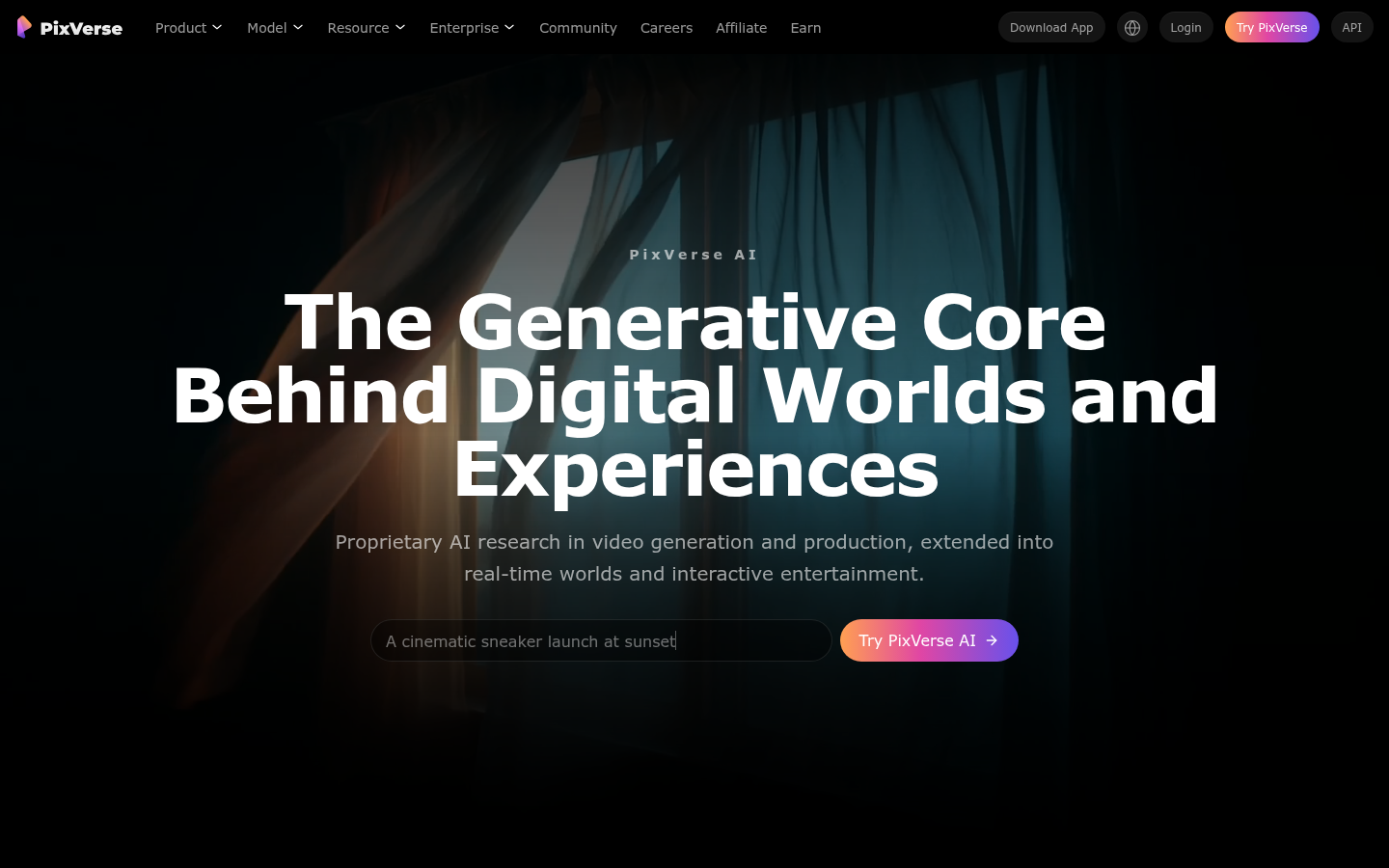
PixVerse is an AI video generation platform built for content creators, marketers, game developers, and digital artists who need to turn text prompts, images, or reference assets into finished video output. It combines multiple proprietary models with a suite of production tools spanning clip generation, cinematic control, lip sync, and real-time world modeling. The core workflow is prompt-or-image-in, video-out, supported by templates, an AI agent for conversational direction, and a node-based canvas for building multi-step video pipelines. Based on the available material, PixVerse is positioned less as a single-purpose video generator and more as a broader AI video production suite with enterprise and developer access points.
What it does
PixVerse converts text descriptions or uploaded images into short AI-generated video clips, and extends that generative core toward more advanced use cases like cinematic production, character-consistent storytelling, and real-time interactive worlds. It targets creators who need fast video output for social content or ads, as well as developers and studios building on top of video generation models via CLI or API access. The platform frames itself around three model tiers — PixVerse V6 for precision control and native artistry, PixVerse C1 for cinematic control and physics simulation, and PixVerse R2 for high-fidelity portraits, kinetic aesthetics, and progress toward persistent, playable real-time worlds. This spread suggests PixVerse is trying to serve both short-form content creation and more experimental real-time/interactive entertainment use cases from a single generative foundation.
Key capabilities
- Text & Image to Video: Generate video clips directly from a text prompt or a source image, without manual animation or editing work.
- Agent-driven direction: A conversational agent lets users describe desired changes, refine motion, and keep creative context across iterations rather than re-prompting from scratch.
- Canvas workflow builder: A node-based interface connects references, prompts, motion parameters, and outputs into an editable graph for planning and rerunning complex video production sequences.
- Marketing Hub: Guided workflows generate ready-to-use marketing and e-commerce video ads (e.g., from a product image or URL) without manual prompt tuning.
- Lip sync and character tools: Built-in lip sync (voice, sync, and sound alignment) and character-consistency features support narrative or branded video work across multiple shots.
- Developer access: A CLI and API-style access point allow generation to be triggered from a terminal or integrated into external pipelines, alongside mini-apps for quick, single-purpose utility tasks.
Pricing
PixVerse follows a freemium model: a free tier is available for generating videos, with premium plans unlocking additional capacity, models, or features. No specific plan names, credit allotments, or confirmed price points were available in the reviewed source material, so exact figures should be verified directly on the PixVerse site before purchase decisions are made.
Editorial review
PixVerse's strength lies in breadth: rather than offering a single text-to-video generator, it bundles templates, an agent-based conversational workflow, a visual canvas for multi-step production, marketing-specific ad generation, and early-stage real-time world modeling under one product umbrella. This makes it a reasonable starting point for teams that want to experiment across several video use cases — social clips, ad creative, and narrative shots — without switching tools. The CLI and mini-apps also suggest an attempt to serve more technical users alongside casual creators, which is less common among consumer-facing AI video tools.
The trade-off is that this breadth can dilute clarity: with three separate model tiers (V6, C1, R2) each emphasizing different strengths (control, cinematics, real-time worlds), prospective users may need to spend time understanding which model fits their specific output goal. Pricing transparency is also limited in the material reviewed — while a free tier exists, the absence of a clear public pricing breakdown makes it harder to evaluate cost-per-output ahead of signup. PixVerse looks best suited to content teams and solo creators producing short marketing or narrative video who are willing to test across multiple models, and to developers interested in a CLI/API entry point into AI video generation, rather than users seeking a single, narrowly-scoped video generator with fully transparent pricing upfront.