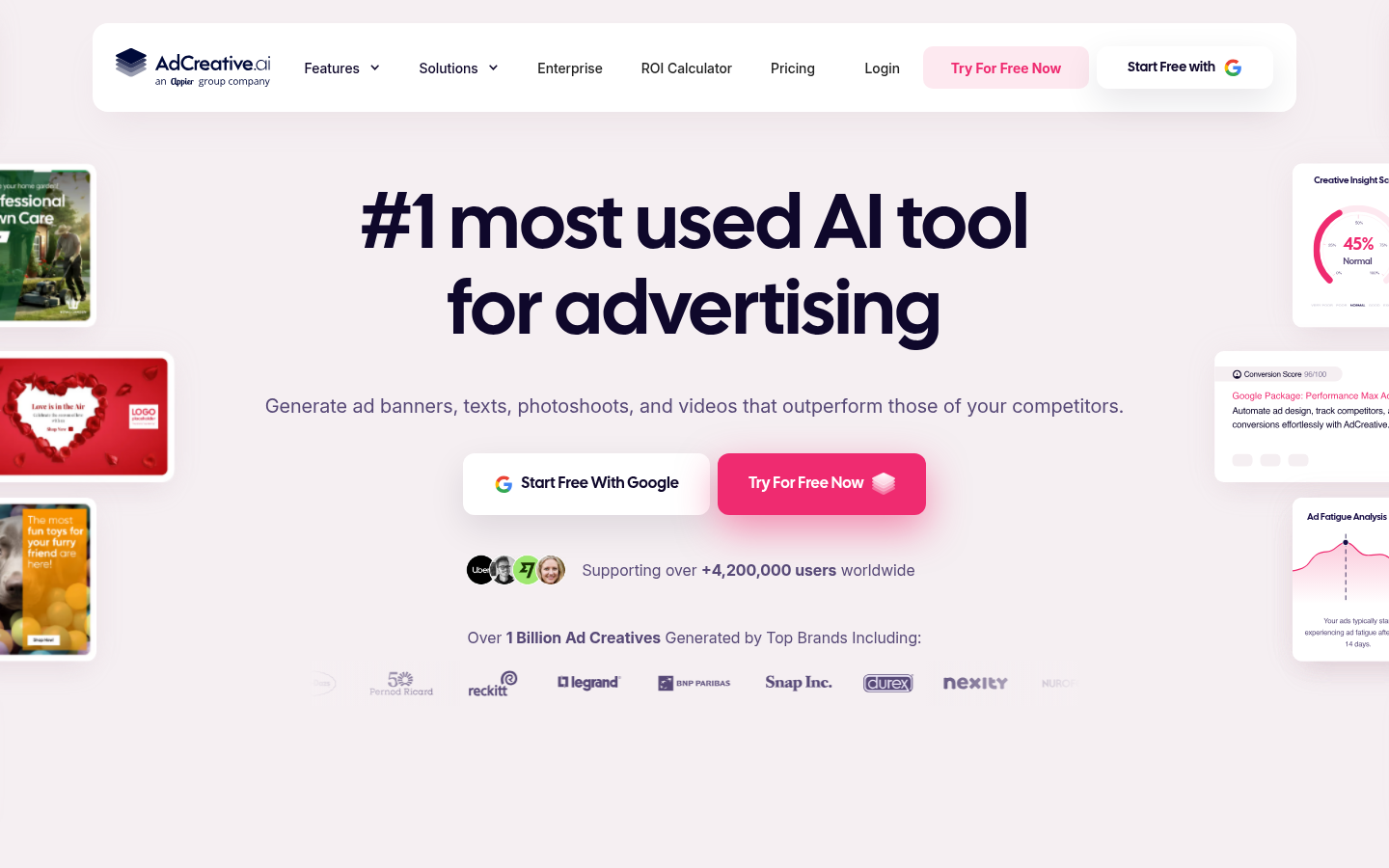
AdCreative.ai is a web-based AI ad creative generator for performance marketers, e-commerce brands, small businesses, and agencies that need a steady supply of ad variations without a design team. You import your brand by scanning your website, choose an ad type, and the tool generates static ad creatives, product-shot visuals, video ads, and ad copy. Its main selling point is that it pairs generation with analysis: it predicts creative performance and brand recall, surfaces audience insights, and shows competitors' top-performing ads. The site says the product has more than 4 million users, and its logo lists enterprise customers such as Snap Inc., Philips, Reckitt, and BNP Paribas.
What it does
AdCreative.ai addresses the creative bottleneck in paid advertising: campaigns need many ad variations to test, and producing them by hand is slow and expensive. The workflow has three steps:
- Import your brand. Enter a website URL and the tool pulls brand assets, colors, and product information.
- Select an ad type. Pick a format, such as a static social ad, a product-focused e-commerce creative, or a video ad.
- Generate ads. The AI produces a batch of on-brand variations that you can review, edit, and export.
The homepage is organized around a few use cases. E-commerce brands can turn product shots into video ads. Small businesses can get usable creatives quickly. Marketers can generate ads "instantly from a website" instead of writing a creative brief. The site also claims "up to 14x more conversions" with "no designers, no guesswork." That is the vendor's own figure and should be read as a marketing claim, not an independent benchmark.
Key capabilities
- Website-to-ad generation: Scans a brand's website to import assets and product details, then generates ad creatives without manual design setup.
- Image, video, and copy output: Produces static ad visuals, headlines and ad text, and video ads, including turning still product photos into motion creatives.
- Custom templates: Lets teams build and reuse branded templates so generated ads stay visually consistent across campaigns.
- Creative performance and brand recall prediction: Scores creatives before launch to estimate how they might perform and how memorable the brand is, which helps narrow down variations before spending on tests.
- Audience insights: Provides audience-level analysis to guide messaging and targeting decisions.
- Competitor ad discovery: Shows competitors' top-performing ads, which is useful for spotting creative angles and formats already working in a category.
Pricing
AdCreative.ai is sold as a subscription SaaS product with paid plans, and the source material indicates a free trial or free entry option. The homepage links to a pricing section, but the scraped content did not include confirmed plan names, prices, or credit limits, so check current tiers and usage caps directly before committing.
Pricing page: View pricing
Editorial review
Strengths:
- It covers the whole creative loop in one place: brand import, generating multiple formats, scoring before launch, and competitor research. Most generic AI image tools stop at generation.
- Website-based brand import makes onboarding fast, which matters most to small businesses and lean e-commerce teams without in-house designers.
- Adding video ads and product-shot-to-video conversion makes it more useful for social platforms, where short-form video leads.
Trade-offs and limitations:
- Headline figures such as "14x more conversions" and "#1 most used AI tool for advertising" come from the vendor. They aren't independently verified.
- Predictive scoring is useful for deciding what to test first, but it doesn't replace live A/B testing.
- Template-driven output can look similar across brands that use the same formats, so teams with a strong visual identity may need to spend real time on custom templates.
- The scraped material doesn't detail pricing, and it doesn't confirm which ad-platform integrations or direct publishing options exist. Evaluate these during the trial.
Best fit:
- Performance marketers and media buyers who need a high volume of creative variations for Meta, Google, and other paid channels.
- E-commerce brands that want to turn product catalogs into ads quickly.
- Agencies producing creatives for several clients.
Brand-led teams focused on original, campaign-level creative work will likely find it most useful for iteration and testing rather than flagship concepts.