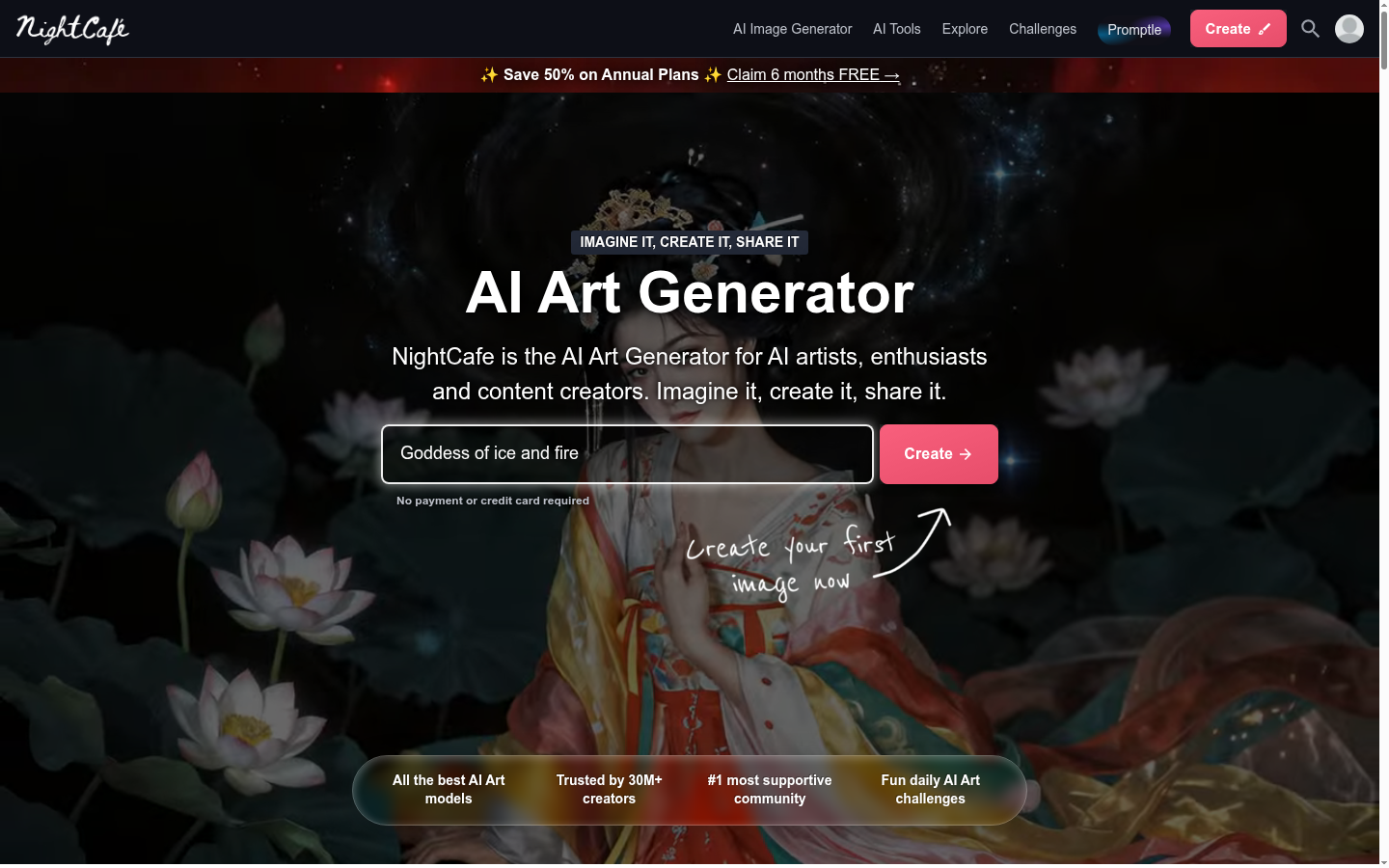
NightCafe is a web-based AI art generator built for artists, hobbyists, and content creators who want to produce images, videos, and design assets without juggling separate tools for each AI model. It positions itself as an all-in-one hub, giving users access to multiple leading AI art and video models inside a single creator interface, backed by a large community gallery for sharing and discovering generated work.
What it does
NightCafe converts text prompts into finished artwork, letting users generate images, edit existing photos, create short AI videos, and produce consistent recurring characters across multiple generations. It is aimed at digital artists, social media creators, and everyday hobbyists who want fast, varied AI-generated visuals without learning the technical setup behind individual diffusion or generative models. Rather than building a single proprietary model, NightCafe functions as an aggregator platform, routing prompts to different underlying AI engines (including recent image and editing models referenced on the site, such as Nano Banana 2 and GPT Image variants) so users can compare styles and outputs in one workspace. The product also extends beyond raw image generation into templated tools for specific outputs like tattoos, banners, flags, and coloring pages, making it usable for both fine-art experimentation and practical design tasks.
Key capabilities
- Text-to-image generation: Turn written prompts into artwork using a selection of AI models, useful for illustration, concept art, and social content.
- Image editing and prompt-based edits: Modify existing images through prompt-driven editing tools rather than manual retouching.
- AI video creation: Generate short video clips from prompts or images, expanding beyond static art into motion content.
- Consistent character generation: Maintain a recognizable character across multiple images, which is relevant for comics, branding, or serialized content.
- Purpose-built generators: Dedicated tools for tattoo designs, flags, banners, character art, coloring pages, and gradient or 4K wallpapers.
- Community gallery: A public feed of user-created art, supporting discovery, inspiration, and social sharing within the platform.
Pricing
NightCafe operates on a freemium model: core generation features are accessible for free, with premium options available for expanded usage or additional capabilities. The site lists standard payment methods (PayPal, major cards, Apple Pay, Google Pay), indicating a straightforward paid-upgrade path alongside the free tier, though specific plan names and credit pricing are not detailed in the available source material.
Editorial review
NightCafe's main strength is breadth: instead of committing to one AI model, it gives users a menu of image, editing, and video models in a single account, which lowers the friction of testing different generation styles for a given prompt. This aggregator approach is well suited to hobbyists and content creators who want variety and don't need deep control over a specific model's parameters. The addition of task-specific generators (tattoos, banners, flags, coloring pages) shows an effort to serve practical, keyword-driven use cases beyond generic "AI art," which is a sensible differentiator in a crowded image-generation market.
The trade-off is that as a multi-model aggregator, NightCafe is dependent on third-party model access and update cycles rather than a single owned model, so feature availability and output quality may shift as underlying models change. The freemium structure is confirmed, but the source material does not specify credit limits, subscription tiers, or exact pricing, so prospective users should verify current plan details directly on the site before committing. The strong community and gallery layer, plus long-standing brand recognition (the site cites past press coverage from outlets like Forbes, BBC, and TechCrunch), suggests platform maturity and an established user base rather than an early-stage product. Overall, NightCafe is best suited to casual creators, social content producers, and artists who want one place to experiment across many AI models, rather than professionals needing granular control over a single specialized model or API-level integration.