
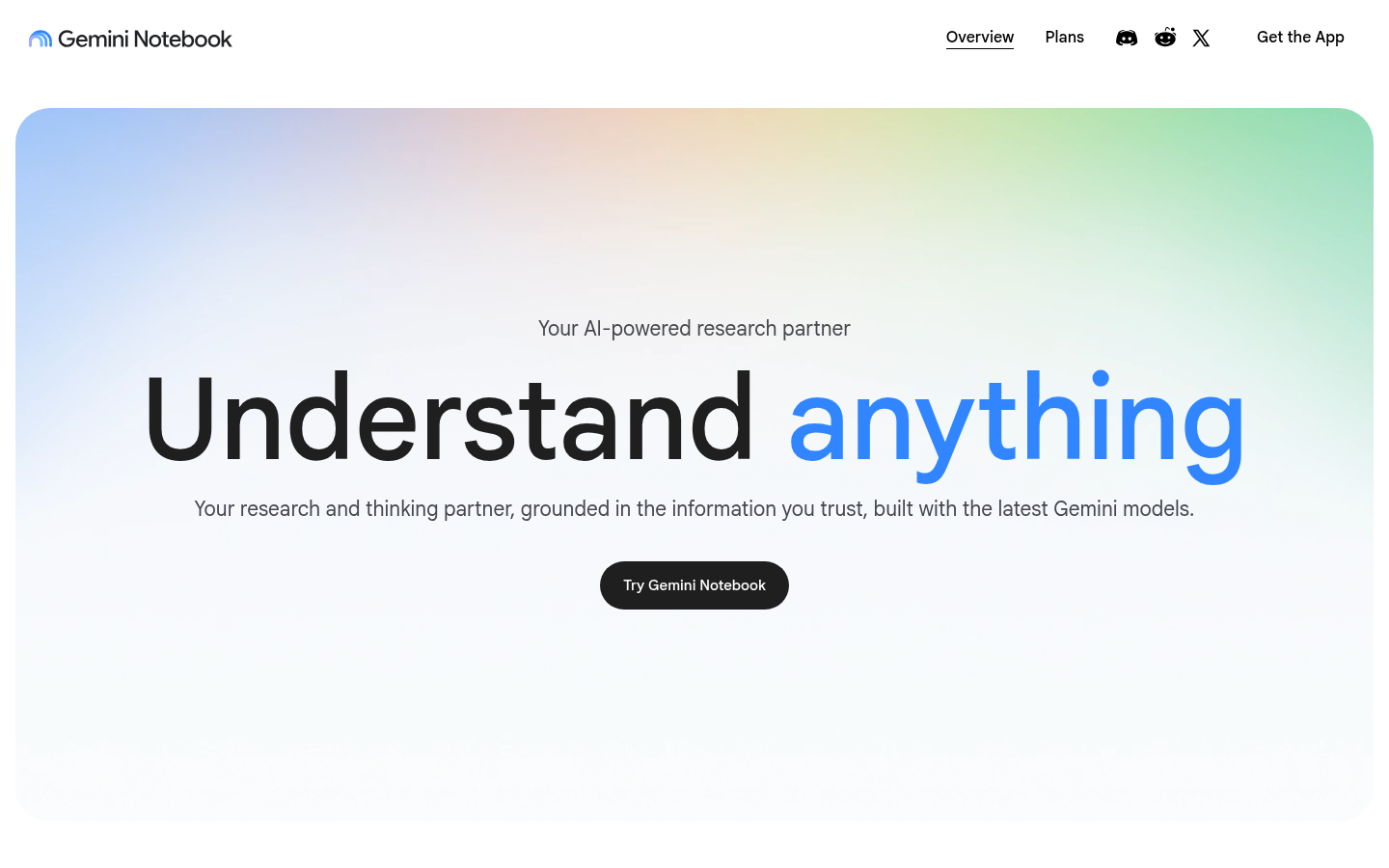
Gemini Notebook, formerly known as NotebookLM, is an AI research tool built by Google for students, researchers, educators, and knowledge workers who need to make sense of large volumes of source material. Instead of pulling answers from the open internet, the tool grounds its responses strictly in documents, PDFs, links, and files the user uploads, positioning it as a "thinking partner" rather than a general-purpose chatbot. The core workflow is simple: add sources, then let the AI convert that content into summaries, study aids, audio discussions, and visual formats. It is aimed at anyone who regularly digests dense material, from academic papers and legal documents to meeting notes and course readings.
What it does
Gemini Notebook analyzes user-provided sources and transforms them into multiple output formats, making it a tool for research synthesis, study preparation, and content repurposing. Users upload PDFs, Google Docs, slides, websites, or other text-based material into a "notebook," and the AI reads across all of it to answer questions, draft reports, and produce learning aids grounded specifically in that content. This source-grounded approach is meant to reduce hallucination risk compared to general AI chatbots, since answers are traceable back to the uploaded material. Typical use cases include exam preparation, literature review, meeting note synthesis, and turning long-form research into shareable formats like slide decks or audio explainers.
Key capabilities
- Audio Overviews: Converts uploaded sources into a discussion-style audio summary, useful for reviewing material hands-free or getting a quick spoken briefing on dense documents.
- Video Overviews: Generates video-format summaries of source material, extending the audio concept into a visual explainer format.
- Mind Maps: Automatically builds visual mind maps from source content to help users see relationships between concepts and topics.
- Reports and Data Tables: Produces structured written reports and extracted data tables directly from uploaded sources, useful for research synthesis and comparison tasks.
- Flashcards and Quizzes: Creates study aids like flashcards and quizzes based on the source material, aimed squarely at students and educators preparing for exams or lessons.
- Infographics and Slide Decks: Turns source content into presentation-ready visual formats, reducing manual work in repackaging research for sharing.
Pricing
Gemini Notebook is offered as a freemium product: the extracted pricing data confirms a free tier is available with additional premium options for expanded usage. No specific paid plan names, prices, or usage caps were confirmed in the available source material, so exact premium tier details should be verified directly on the product's website before making a purchasing decision.
Editorial review
Gemini Notebook's main strength is its source-grounded design: by restricting AI outputs to user-provided documents, it targets a real pain point with general chatbots — ungrounded or fabricated answers. The breadth of output formats (audio, video, mind maps, flashcards, quizzes, reports, infographics, slide decks) is unusually wide for a research tool and suggests strong appeal for students and educators who need to repurpose the same source material into multiple study or presentation formats without redoing the analysis each time.
The trade-off is that the tool is only as useful as the sources fed into it; it is not designed for open-web research or real-time information retrieval, so users needing broader search capability will still need a separate tool. As a Google product, it benefits from tight integration with the Google ecosystem (Docs, Slides), though the available material does not detail specific file-type limits, collaboration features, or enterprise controls, so teams with strict compliance or data-residency requirements should confirm those details directly. Overall, Gemini Notebook is best suited to individual researchers, students, and educators who need to convert dense reading material into digestible, shareable formats quickly, rather than teams looking for a full-scale competitive intelligence or web-research platform. The free tier makes it low-risk to trial for anyone regularly working through long documents or coursework.





