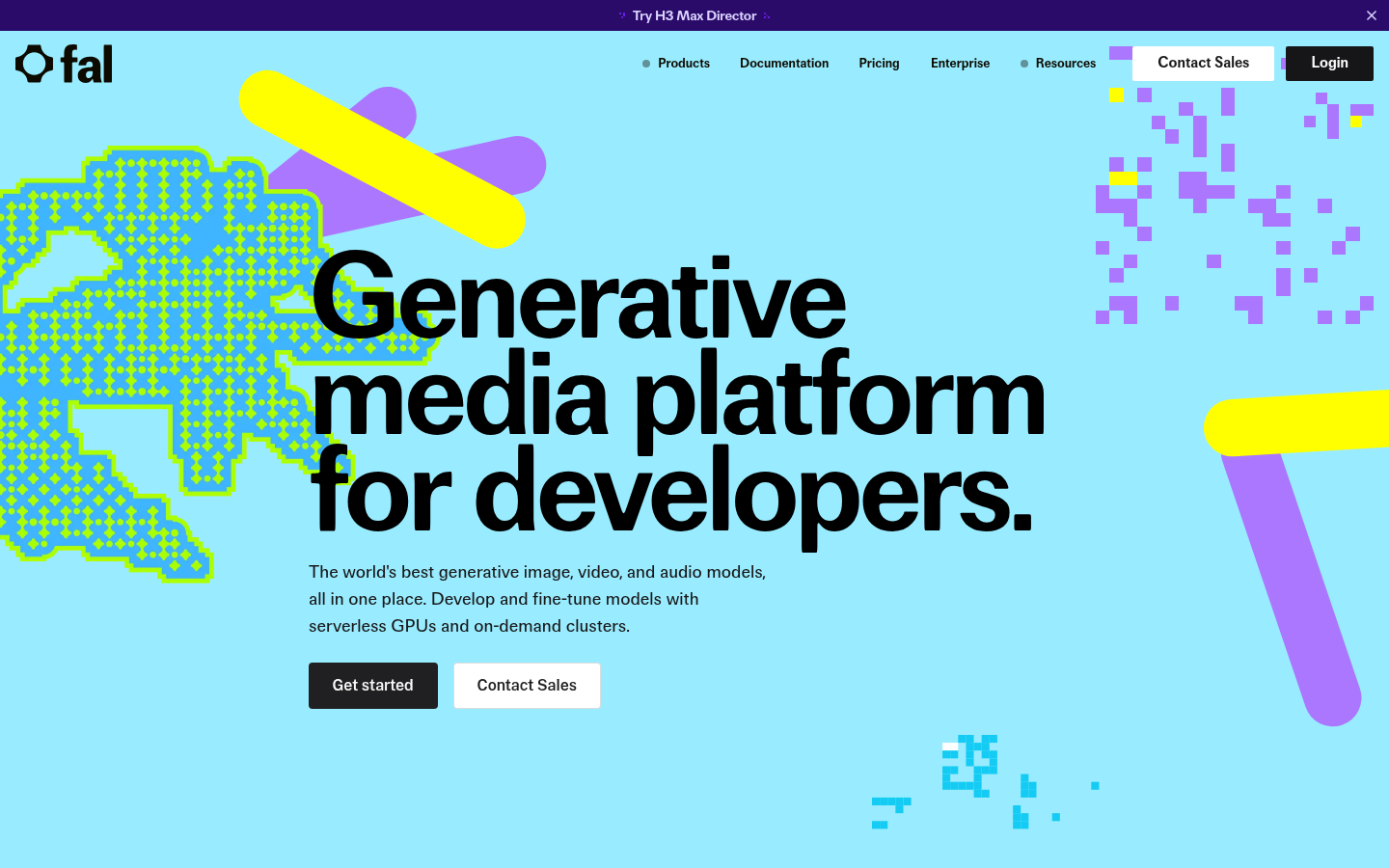
Fal (fal.ai) is a generative media API and cloud compute platform built for developers, product teams, and enterprises who need to embed AI image, video, audio, and 3D generation into their own applications. Rather than building and hosting inference infrastructure in-house, teams use fal to call hosted model APIs or deploy custom models on serverless GPUs. The platform is positioned as a developer-first layer between raw generative AI research models and production apps, with a stated focus on speed, reliability, and cost efficiency at scale.
What it does
Fal is a model API and serverless GPU platform that lets developers run generative AI models for images, video, audio, and 3D through simple API calls instead of managing their own GPU infrastructure. It aggregates access to models such as FLUX, Kling, Hailuo, Veo 3, Wan, and Seedance, alongside audio and 3D generation models, exposing them through unified, production-ready APIs. Beyond running third-party and open models, fal also supports fine-tuning and training custom models, then deploying them on the same serverless infrastructure. The core use cases are building AI-powered creative tools, adding text-to-image or text-to-video generation to SaaS products, batch content generation pipelines, and enterprise-scale media generation workloads that need predictable, pay-per-use costs.
Key capabilities
- Large model catalog: Access to 1,000+ production-ready image, video, audio, and 3D generation models through a single API layer, including well-known names like FLUX, Kling, Hailuo, and Veo 3.
- Serverless GPU deployment: Deploy custom or fine-tuned models on serverless infrastructure without managing servers, with GPU options spanning H100, H200, B200, B300, and RTX PRO 6000.
- On-demand compute clusters: Provision dedicated GPU clusters for training and fine-tuning workloads beyond standard serverless API calls.
- Usage-based billing granularity: Video models are billed per second or per video depending on the model, image and other model types have their own output-based pricing, allowing cost tracking at the workload level.
- Enterprise-ready infrastructure: Positioned for scale with reliability and throughput suited to companies embedding generative media into consumer-facing products.
- Model training and fine-tuning support: Tools to train and customize models on fal's infrastructure rather than only consuming pre-built model endpoints.
Pricing
Fal uses pay-per-use pricing rather than flat subscription tiers. Serverless GPU compute is billed hourly, with published "as low as" rates including H100 from $1.89/hr, H200 from $2.10/hr, RTX PRO 6000 from $1.10/hr, B200 from $3.49/hr, and B300 from $4.49/hr, alongside higher list prices for non-discounted usage. Model API pricing varies by model and is billed per output unit — for example, per second of video (Wan 2.5, Kling 2.5 Turbo Pro, Veo 3) or per video/image generated (Ovi and others) — rather than a flat per-request fee. Enterprise customers can contact sales for custom deployment pricing. The public pricing page does not list a zero-cost tier, so budgeting should assume metered consumption from the first API call, though a getting-started flow is available before committing to production spend. Pricing page: View pricing
Editorial review
Fal's core strength is breadth combined with granular, usage-based billing: developers get a very large catalog of current generative media models behind one API without individually integrating each model provider, and can compare cost per output (e.g., cost per second of video) across models before committing. The serverless GPU pricing for training/fine-tuning and custom deployment is transparent for hourly rates, which is useful for teams estimating infrastructure spend for larger workloads. The trade-off is that fal is not a design tool or consumer app — it is API infrastructure, so it best fits developers and technical teams building products, not non-technical creators looking for a point-and-click interface. Because pricing is fully usage-based with no visible free tier on the pricing page, teams should model expected throughput (seconds of video, number of images) carefully before scaling usage. Fal is best suited for startups and enterprises building AI-native media features — video generation apps, creative tools, marketing content pipelines — that want to avoid managing their own GPU fleet while retaining access to leading models like FLUX and Kling as they evolve.